Quick Grilled Rosemary Chicken and Sweet Potato

Quick Grilled Rosemary Chicken and Sweet Potato

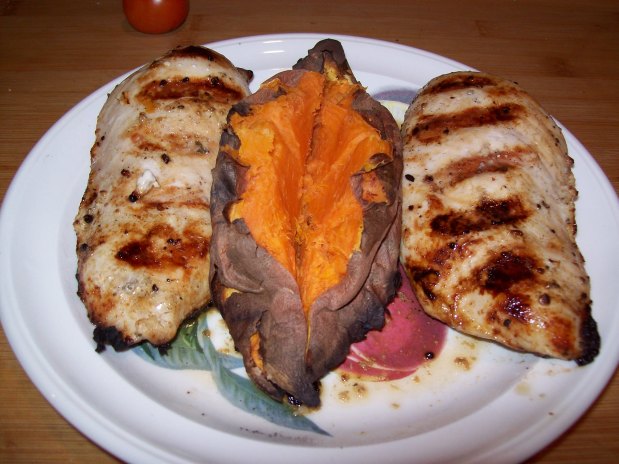
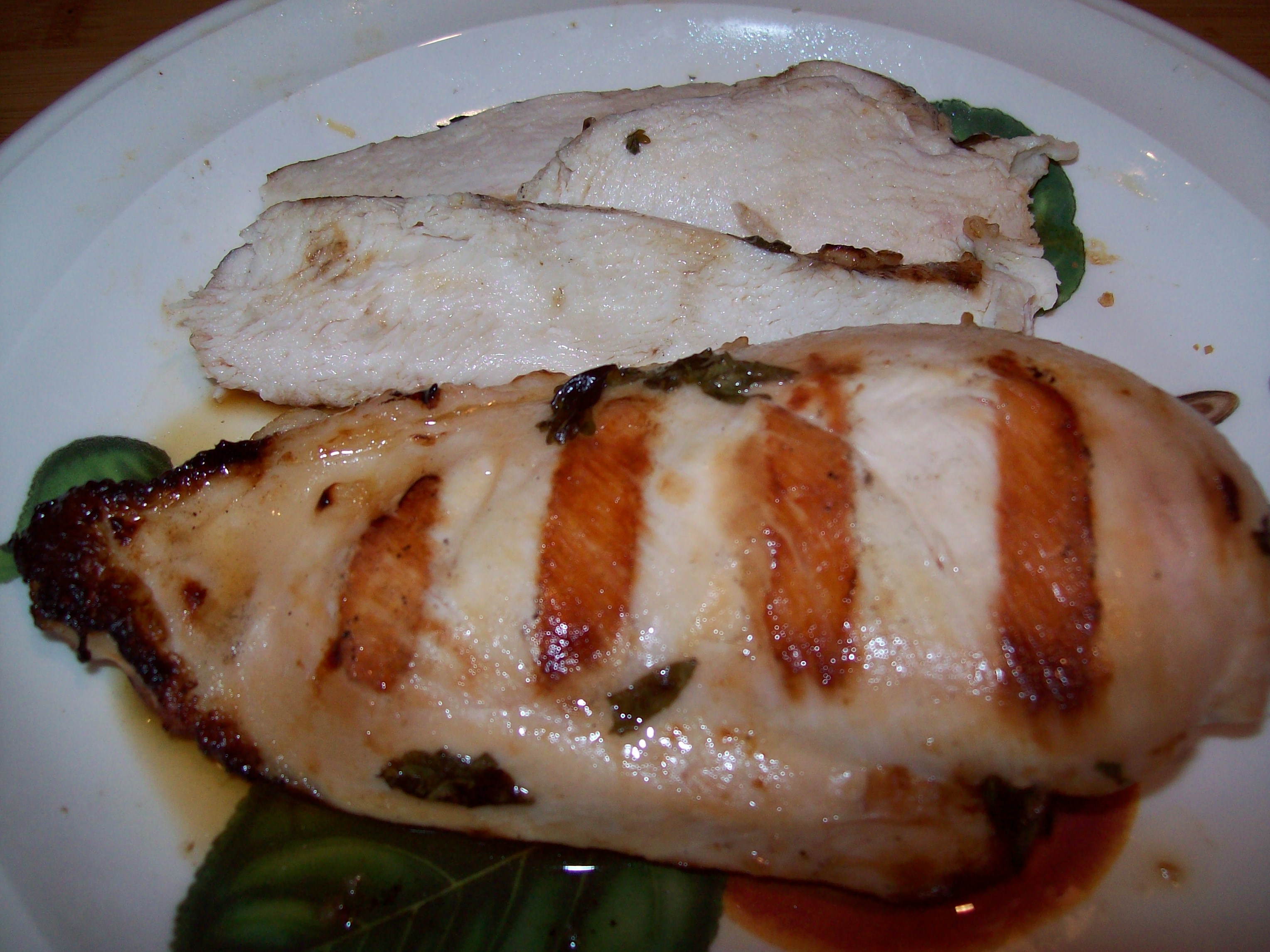
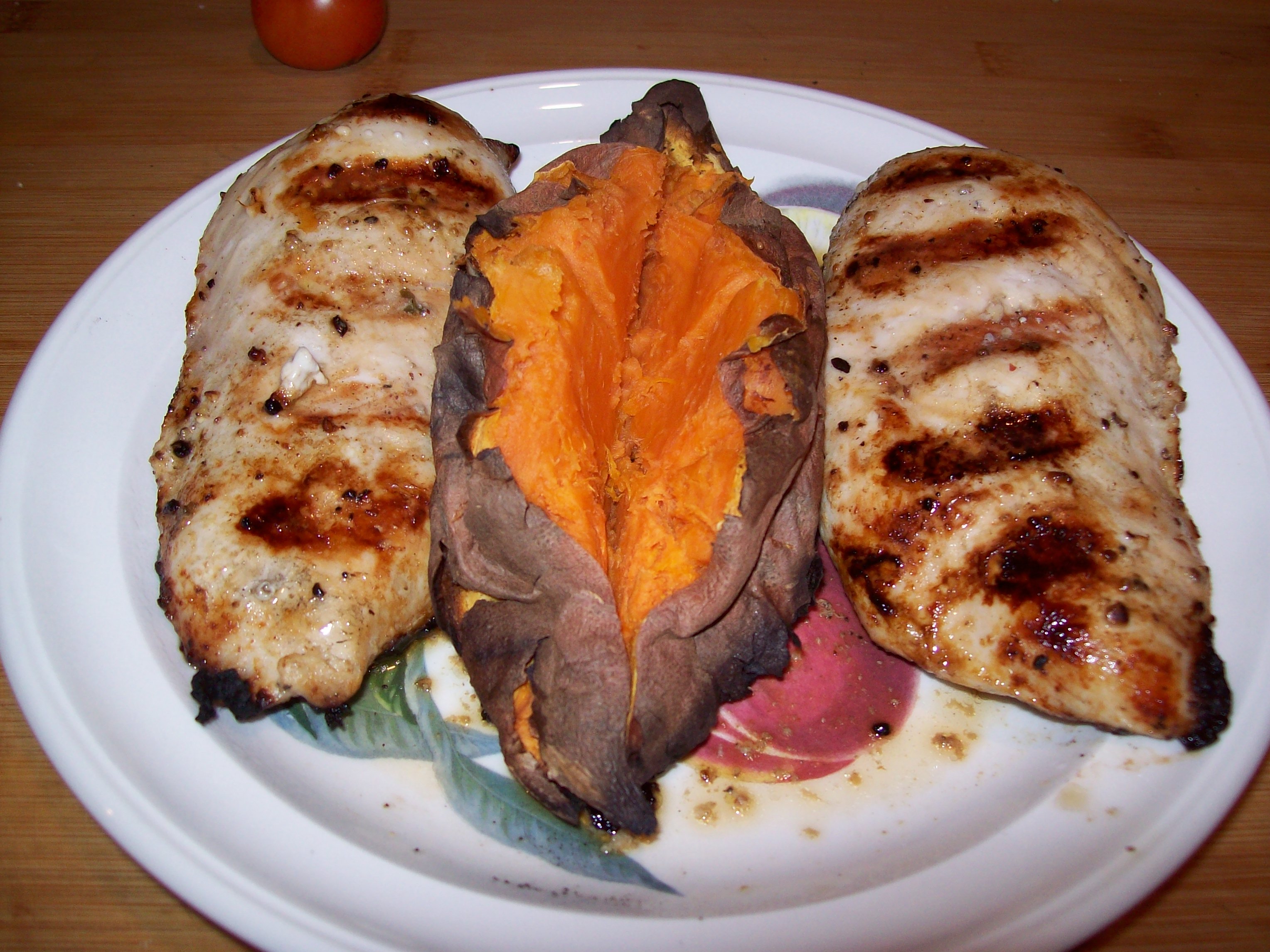
Lyn is on a strict diet and I am on my own for meals but she made me promise to eat healthy and none of those bachelor meals eaten over the sink to save on plates. I feel I have done pretty well for the last two weeks. Only once did I go with a meal of prepackage frozen mac and cheese from Annie’s but it was organic and not bad. I think it is hard to cook for one, not sure about you but I tend to get more inventive no creative when I cook for someone else.  But on the other hand I am more willing to try something if I know that I will be the only one eating who cares if it was a failure, one learns from them.  I started with this grilled chicken, sweet potato and roasted cauliflower on the side. Ok I forgot to take a picture with the cauliflower you caught me.

Ingredients

  • 1 skinless chicken breast split
  • Salt and pepper to taste
  • 1 Tbsp. garlic rosemary oil (I had a lot of rosemary from the garden so infused some oil, 1 just rosemary and one with rosemary and garlic)
  • Some fresh chopped rosemary.
  • 1-Sweet potato and cauliflower

How

Rinse and dry the chicken very well

Salt and pepper rub with olive oil

Wrap in plastic wrap and refrigerate for 20-30 minutes.

Preheat the grill to high and clean off the grates

Grill trying only to turn once until done about 160 degree internally about 4-5 minutes per side.

Remove, cover and let sit for at least 10 minutes

Slice against the grain

See recipe for roasting vegetables.

Cook the sweet potato in the microwave so it is partially cooked then finish on the grill

Against the Grain

I not talking about rubbing someone the wrong way, I’m talking about the way to cut most meats so that they are tenderer a better chew if you will. We read it in cookbooks all the time: “Slice thinly against the grain.” But what does slicing against the grain really mean?

  • The grain is the most important characteristic: it is the direction which the muscle fibers are aligned, and properly identifying it can make the difference between tough and tender. Take a close look at your meat, and you’ll see that just like wood, it’s got a grain.
  • Grill marks are probably the lines most often confused with grain. Many a time, I’ve seen some start slicing meat at a 90° angle to the grill marks, rather than to the natural grain of the meat (which may or may not coincide with those grill marks).
  • Can’t see the grain well sometime if you bend the piece of meat you can see it or a thin slice on the end and then look at the cross section for the direction. I can’t tell you how many times I look at the grain precooking and then after I grill it is sometimes hard to tell.
Halftime White Turkey Chili

Halftime White Turkey Chili

Nothing better than the fall it brings sweatshirt weather and football, not to mention the trees start to put on a show of their own. I grew up in the music department at Norwood high and spent at 4 years at every football game marching, first with those high topped hats then in our Norwood blue blazers and white bucks, ahhh white bucks. My most favorite memory is the one parade where they stuck us behind the cows or horses, I had it better than most I played the trombone, was in the first row and could see it coming.

I also like squash soups, butternut being my favorite fall treat.

We love Wholefoods and found this recipe on their site for a chili with a different twist from the red Chili we all picture in our minds eye. It makes for perfect halftime eating on a crisp autumn day.

Go Pats!


Ingredients:

  •  1 1/2 tablespoon olive oil, divided
  • 2 pounds ground turkey breast
  • 1 green bell pepper, cored, seeded and chopped
  • 1 medium yellow onion, chopped
  • 1 tsp. ground coriander
  • 2 Tbsp. ground cumin
  • 1 tsp. dried oregano
  • 1/2 tsp. salt
  • 1 bay leaf
  • 1 can tomatillos, drained and chopped
  • 1 can diced green chiles, drained
  • 1 small jalapeño, seeded and finely sliced
  • 2 cups low-sodium chicken broth
  • 3 cups cooked Great Northern beans, drained
  • Chopped cilantro, for garnish (optional)
  • 7 tsps. grated Monterey Jack cheese, for garnish (optional)
  • 7 tsps. sour cream, for garnish (optional)

How:

Heat 1/2 tablespoon of the oil in a large pot over medium high heat. Add turkey and cook, stirring often, until browned. Transfer to a bowl and return pot to heat. Add remaining 1 tablespoon oil, bell pepper and onion and cook until softened and golden brown. Return turkey to pot and add coriander, cumin, oregano and salt. Stir well to combine. Add bay leaf, tomatillos, chiles, jalapeños and broth, reduce heat and simmer, uncovered, 45 to 50 minutes. Gently stir in beans and cook for 30 minutes more. Stir in cilantro, ladle chili into bowls and garnish with cheese and sourcream and Beer, if you like.


History of Chili

From International Chili Society

Perhaps it is the effect of Capisicum spices upon man’s mind; for, in the immortal words of Joe DeFrates, the only man ever to win the National and the World Chili Championships, “Chili powder makes you crazy.” That may say it all. To keep things straight, chile refers to the pepper pod, and chili to the concoction. The e and the i of it all.

The great debate, it seems, is not limited to whose chili is best. Even more heated is the argument over where the first bowl was made; and by whom. Estimates range from “somewhere west of Laramie,” in the early nineteenth century – being a product of a Texas trail drive – to a grisly tale of       enraged Aztecs, who cut up invading Spanish conquistadors, seasoned chunks of them with a passel of chile peppers, and ate them.   More

Pig Skins

Pig Skins

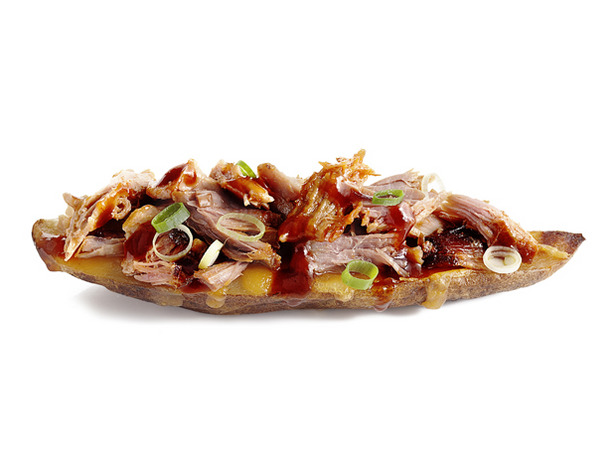
You can assemble these game day pig skins ahead of time, if you like. For daintier eaters try pop in your mouth bite-size pig skins, make this recipe with 12 small potatoes instead. Or for a twist, substitute smoked turkey or chicken for the pork, heck make them all and pig out.

 Ingredients:

  • 6 medium Yukon gold potatoes (about 2 1/2 lbs.)
  • 1 Tbsp. olive oil
  • 1 large yellow onion, thinly sliced
  • A couple of green onions slice thin for garnish
  • Salt and black pepper to taste
  • 1 cup BBQ sauce (I used my Root beer BBQ sauce but you can use your own)
  • 3/4 cup sour cream
  • 1/4 cup salsa
  • 1 cup grated Monterey Jack
  • 1 1/2 cup shredded pulled pork (You can buy in store or make your own)

How:

Preheat oven to 400°F. Prick potatoes all over with a fork then arrange on a baking sheet and bake until tender, 45 to 50 minutes. Set aside until cool enough to handle, then cut in half lengthwise and scoop out flesh, leaving only about 1/4 inch of potato all around. (Save potato flesh for another use.)

In the meantime, heat oil in a large skillet over medium high heat. Add onions, salt and pepper and cook, stirring often, until golden brown, about 10-15 minutes. Reduce heat to medium and cook until deep golden brown, 6 to 8 minutes more.

Preheat broiler. Divide half of the cheese among potato skins, then top with onions. Arrange pork on onions then top with remaining cheese. Broil until golden brown and bubbly, 2 to 3 minutes. Transfer potato skins to a platter and serve with BBQ sauce, sour cream, salsa on the side and what else BEER!

Go Pats!

Where did potato skins originate?

According to Yahoo Answers

Sorry to tell you, but they originated with TGI Fridays. But don’t worry, it wasn’t the original store in NYC. They were actually concocted by a hungry sous chef in the Atlanta store. The year was 1974.

I still think that Friday’s skins are the best. I was introduced to them in Cupertino, California around 1977, and every Friday night would go to the bar there for skins and beer (extra sour cream, please!). Got fatter than heck that summer.

Now that’s what Fridays would like you to believe is it true? Let’s hear from you?

Won a contest!

Won a contest!

I have never entered a contest except with myself always trying to out do the time before if you know what I mean but I was told about this and said what the heck. And the Universe continues to rain on me, 4 dollar lottery winner, free desert and coffee last night at dinner and to return home to this. Hey it’s the small things in life that make it interesting.
Hi Steve,
I am very happy to announce that you have won my Barbecue Contest!
Let me tell you, your pulled pork kicks butt (no pun intended)!!!  And
I absolutely loved the root beer barbecue sauce.  It is so delicious
and kind of surprising too – I’ve used Coke in a marinade, but never
root beer as an ingredient.
So thank you so much for passing on that recipe.  I just need your
address and I can send you your gift certificate for $25 to Omaha
Steaks.  And we will be announcing your winning recipe in my latest
e-newsletter.
Deb

The winner is annoucement

www.homestarcuisine.com

Pulled-Pork with Vinegar-based and/or Root Beer BBQ Sauce recipe wins Home Star Cuisine BBQ Contest

 Steve Saver, of Milford, Massachusetts, took home the gold in Home Star Cuisine’s Ethnic and Family Barbecue recipe contest. His Pulled Pork with Vinegar-based and/or Root Beer BBQ sauce earned him a $25 gift certificate to Omaha Steaks.
The first and second runner-ups are Richard Radovsky, of Brockton, Massachusetts, and Jonathan Richmond. Radovsky submitted a recipe that originated in the Peruvian Andes, Steak Anticuchos. Richmond entered his Man O Man Barbecued Ribs. Both will also receive a $25 gift certificate to Omaha Steaks.

If you would like to try the winning recipe, go to the

Thanks to all who entered our BBQ contest………….

……………………………………………………………………………………………………………..

Pulled Pork with Vinegar-Based and/or Root Beer BBQ SaucePulledPork
By Steve Saver,

Ingredients

3 tablespoons smoked paprika

2 tablespoons garlic powder

1 tablespoon brown sugar

1 tablespoon dry mustard

2 tablespoons sea salt

1 5-pound pork roast, preferably shoulder or Boston butt

12 hamburger buns or 24 slider size rolls for serving (we prefer whole wheat)

Directions

Mix the spices and salt together in a small bowl and then rub the spice blend over the pork. Cover with plastic wrap overnight in the refrigerator. If you are in a hurry, let stand for at least one hour.

Preparing the sauce – Vinegar-based or Root Beer

Two methods: Oven and Grill

Oven Method

Preheat the oven to 300 degrees. Put the pork in a roasting pan and bake, covered, until it’s falling apart and an instant-read thermometer inserted into the thickest part registers 170 degrees (about 6-7 hours). Keep in mind the pot you are using (my heavy cast iron pan can reach 250 degrees). Remove the pork from the oven and transfer to a large platter and let rest for 10 minutes. When cool enough to handle (warm), use two forks to shred the pork. Put the shredded pork in a bowl, add barbecue sauce, and mix well to coat. To serve, place several ounces of pork on a hamburger bun and top with Spicy Slaw (see below).

Grill Method

Bring grill temperature up to high, then reduce to medium, looking to get temp between 180 to 250 degrees. Cook slow and low – I have a gas grill so I use indirect heat method.

Prepare as in Oven method. Place pork in disposable tin foil pan that has a couple of holes in bottom on the side without the heat. Grill, covered, until it’s falling apart and an instant-read thermometer inserted into the thickest part registers 170 degrees, about 6-7 hours. Turn once or twice during the cooking process. On the side with the heat, place your smoker tray. Optional: if you want you can wrap in tin foil and cook as above. This gives you moister meat but does not absorb the smoke.

Choices, choices, choices.

Why not both do meat for one hour unwrapped and then wrap and finish cooking (I like to experiment)?

Barbecue sauce (vinegar-based)

Ingredients

2 tablespoons brown sugar

½ cup hot water

1½ cups apple cider vinegar

1 tablespoon paprika

1 teaspoon cayenne pepper

1 teaspoon salt

1 teaspoon black pepper

Directions

In a small saucepan, stir the brown sugar into the hot water until completely dissolved. Add the remaining ingredients and cook on low heat for approximately 5 minutes.

OK I like to make double the sauce ½ for pouring over the pulled pork and the other on the side. But I know some don’t like a vinegar sauce so I always have a bottle on the side.  Maybe, don’t do the vinegar sauce and just use the bottle. It’s up to you and the preferences of your guests.

Root Beer BBQ Sauce

Ingredients

2 cups root beer

2 cups ketchup

1/2 cup fresh lemon juice

6 tbsp. Worcestershire sauce

6 tbsp. light brown sugar

1 tsp. ground ginger

1 tsp. garlic powder

1 tsp. onion powder

Directions

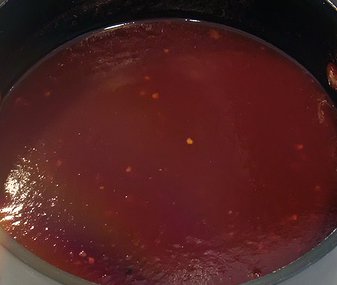
In a medium saucepan, combine remaining ingredients; mix well and bring to a boil over medium heat, stirring occasionally. Reduce heat to medium-low and simmer 20 minutes until sauce is reduced by half.

Serve with coleslaw, chips and grilled corn.

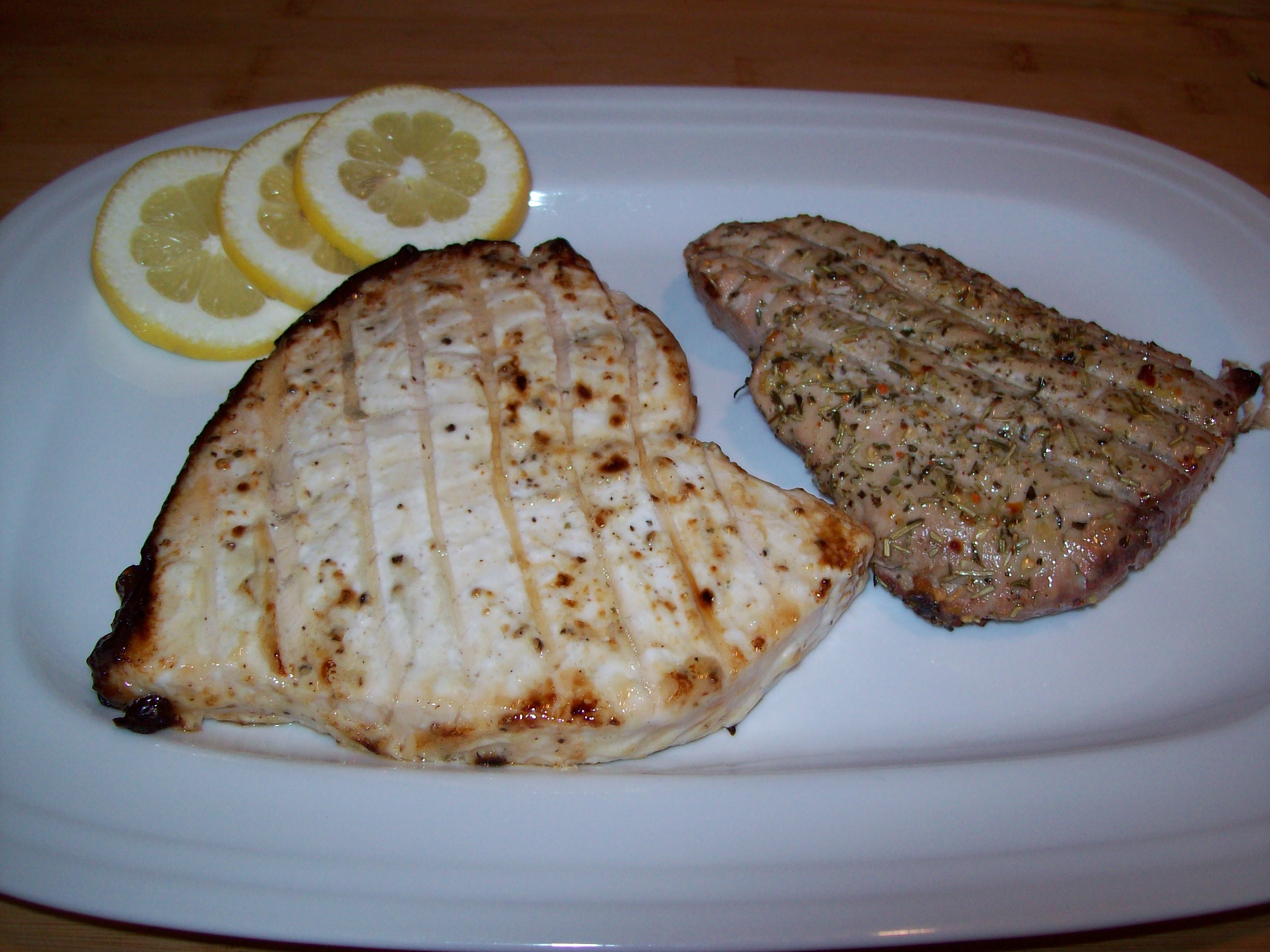
Grilled Swordfish and Tuna Steaks

Grilled Swordfish and Tuna Steaks

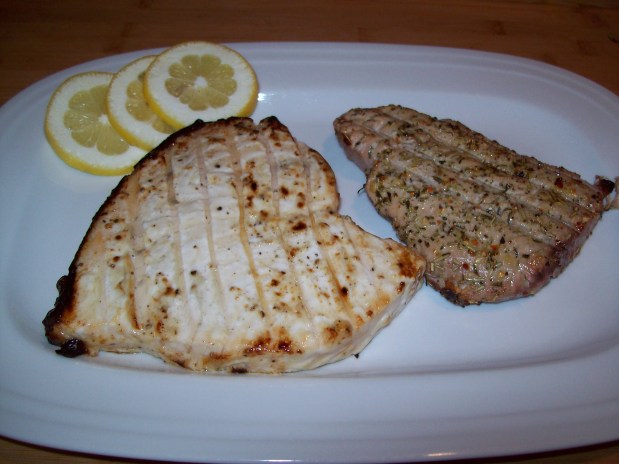
It used to be a joke when I was growing up that on Lobster boil day on the cape I would be the only one at the table without the bib around the neck, without bowl of melted butter and without the nutcracker in front of me. No I would insist on a big fat juicy steak. I was not a lobster or much of a fish lover and living on the Cape that was hard to believe. I did like to suck the legs which I suppose got me trained for my days in New Orleans of pinching tail and sucking head. Then I discovered swordfish, oh yeah! I still grill swordfish the same way Mom showed me, pat it dry some salt and pepper and then give it a good rub in some mayo.

Ingredients

  • 1 swordfish and one tuna steak about 1” thick.
  • Mayo
  • Salt and pepper
  • Olive Oil
  • Fish rub

How

I like to let the fish sit in some grapefruit juice for a little especially if not using right away. Someone once told me or I read that is what Legal seafood does.

Pat dry with paper towel

Salt and pepper the swordfish then take about 1-2 Tbsp. of Mayo and rub all over, set aside

Pat and dry the tuna steak rub with fish rub and then drizzle some Olive oil and rub all over, set aside

Preheat grill until Hot about 15 minutes

Clean the grill and rub with some olive oil on paper towel. Use tongs as to not burn your fingers.

Grill fish about 4 minutes per side

Fish has always been tricky for me to grill it seems 1 second to long and it is dry, especially tuna. I am not a seared tuna lover I tend to prefer medium to medium rare. So I guess what I am saying is cooking time is in your hands.

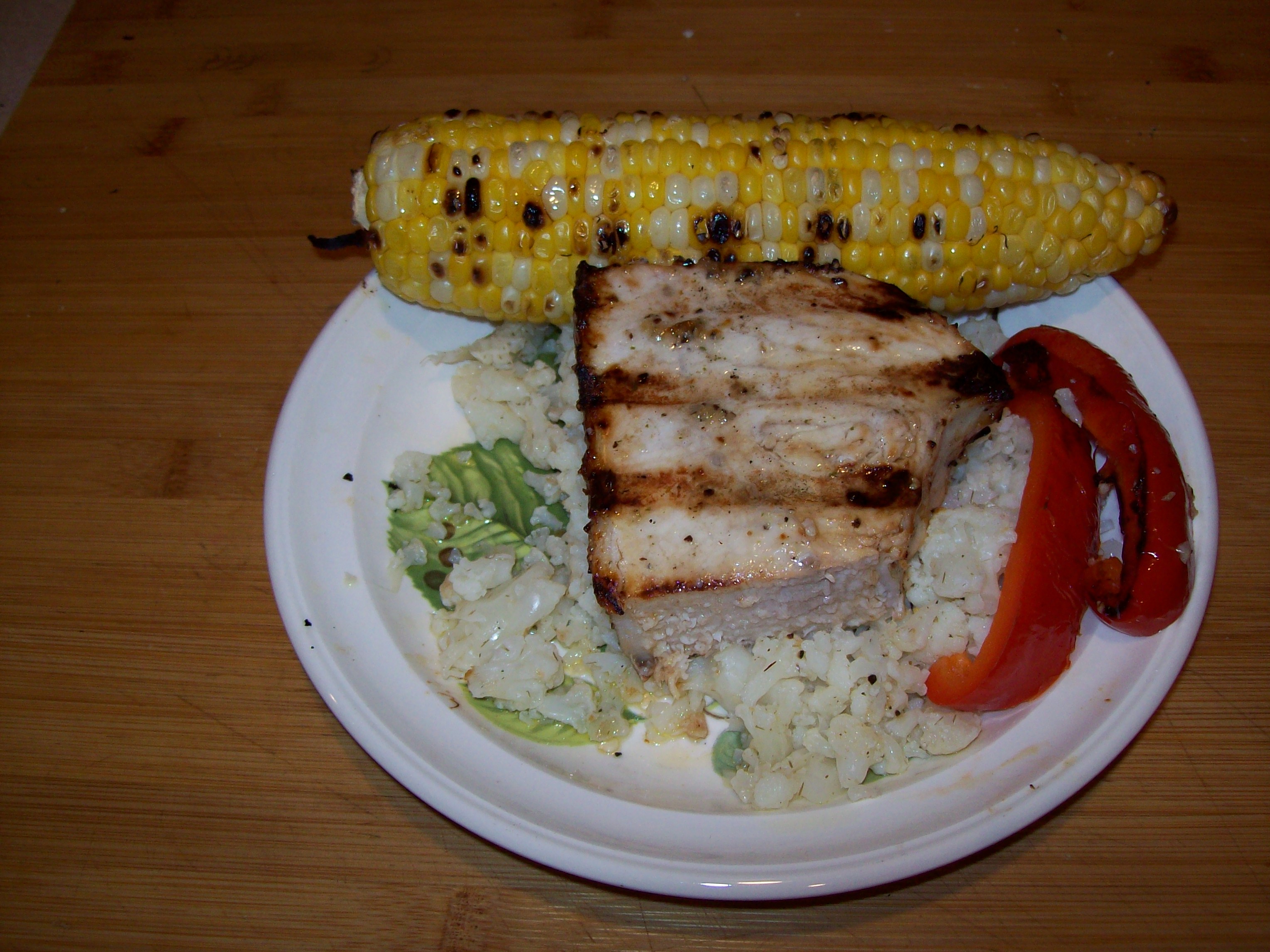
Server with whatever your heart desires I suggest whatever veggies are in season I did Corn and asparagus.

June 2013

June 2013

What are the benefits of swordfish?

Swordfish is a versatile food, and you can eat it as a main course or in salads. Although it does not cure or prevent specific diseases, a moderate amount of swordfish as part of an overall balanced diet may provide some health benefits. Pregnant women should not have swordfish because it is has higher levels of mercury, an unhealthy environmental contaminant, than other seafood.

Prevent Heart Disease

Cooked swordfish has 108 mg of eicosapentaenoic acid, or EPA, and 656 mg of docosahexaenoic acid, or DHA, in each 3-oz. serving. DHA and EPA are omega-3 fatty acids, and your risk for heart disease may decrease when you have a total of 250 mg of EPA and DHA per day, according to the 2010 Dietary Guidelines from the U.S. Department of Health and Human Services. You can get DHA and EPA from other fatty fish, such as herring, mackerel and salmon, and from shellfish, including oysters, mussels and shrimp.

Sponsored Links

Help Control Weight

Swordfish has only 146 calories in a 3-oz. serving, and it can be part of a calorie-controlled diet to prevent weight gain. Obesity increases your risk for developing chronic diseases such as heart disease and Type 2 diabetes, and you will gain weight if you eat more calories than you expend. Another benefit of swordfish for weight control is that each serving provides 20 g protein, a filling nutrient. Protein slows stomach emptying so that you feel full for longer after a meal and may eat less at the next meal, according to the Harvard School of Public Health.

Support Bone Health

Swordfish can help you build or maintain strong bones because each serving supplies 14 mcg of vitamin D, or 93 percent of the daily value. Vitamin D is necessary for your body to properly absorb calcium from food, and a deficiency can cause osteoporosis, or weak bones, and a high risk for fractures. Many Americans, including older adults and individuals who do not get much exposure to the sun, are at risk for inadequate vitamin D intake, according to the 2010 Dietary Guidelines from the U.S. Department of Health and Human Services. Fatty fish, such as swordfish, are among the few natural food sources of vitamin D.

Prevent Nutritional Deficiencies

Each 3-oz. serving of cooked swordfish provides 7.9 mg niacin, or about 40 percent of the daily value for niacin. Niacin, or vitamin B-3, is essential for metabolizing fat, carbohydrates and protein, and a deficiency can lead to dermatitis, dementia and diarrhea, according to the Linus Pauling Institute Micronutrient Information Center. Selenium is an essential mineral that supports antioxidant activity in your body, and swordfish provides 58 mcg of selenium, or 83 percent of the daily value.

Read more: http://www.livestrong.com/article/506189-what-are-the-health-benefits-of-swordfish/#ixzz2408uzf7J

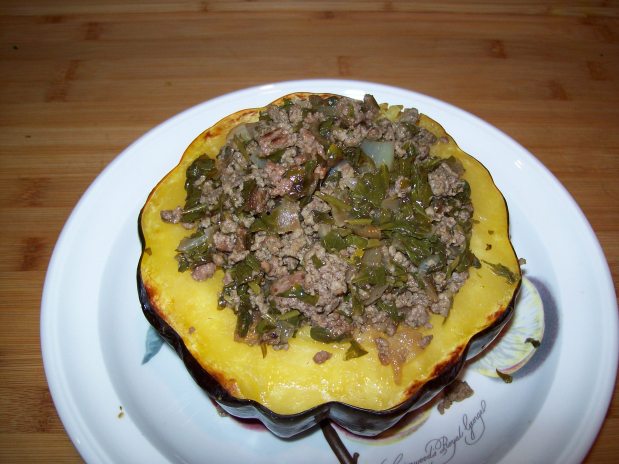
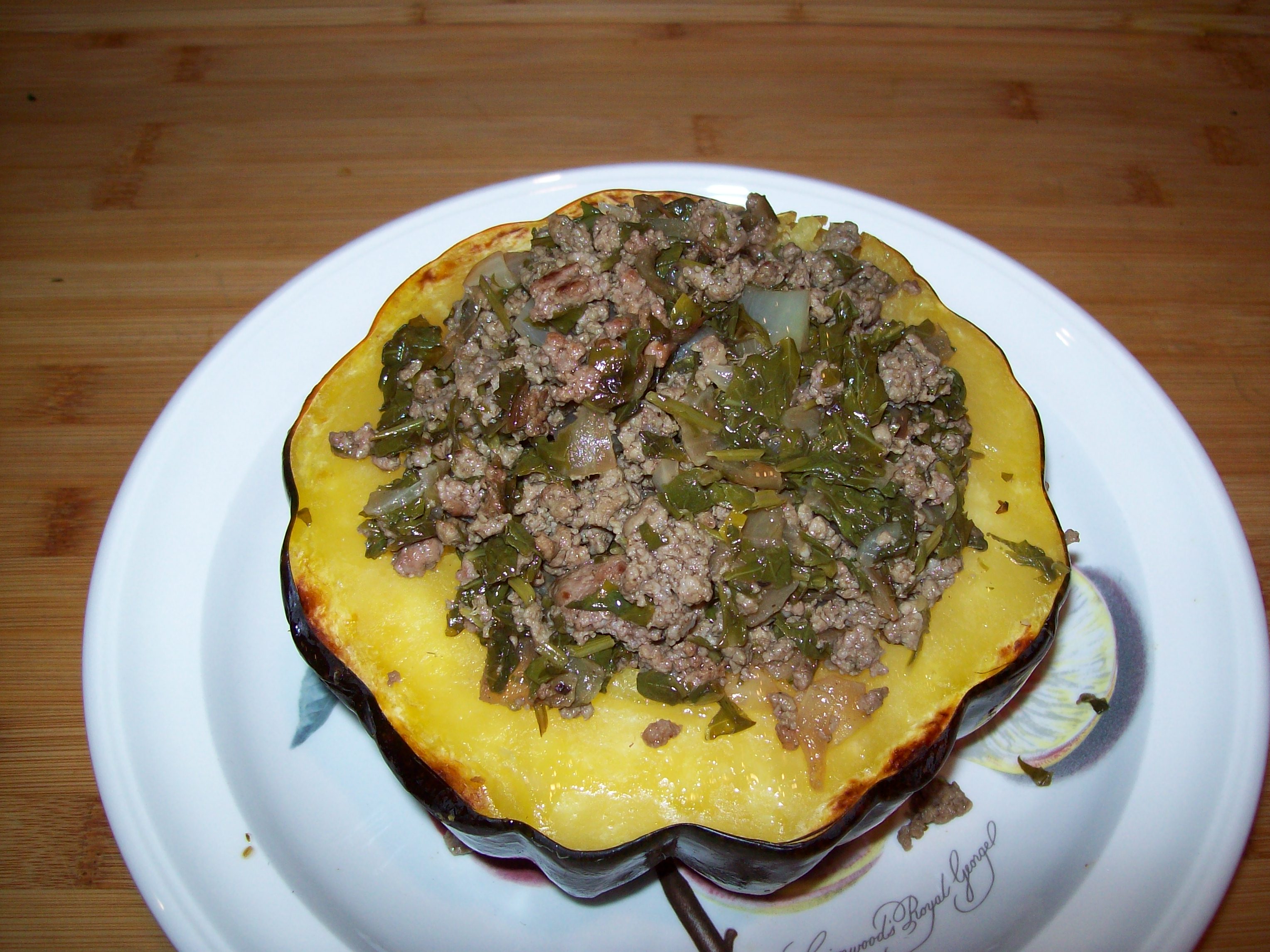
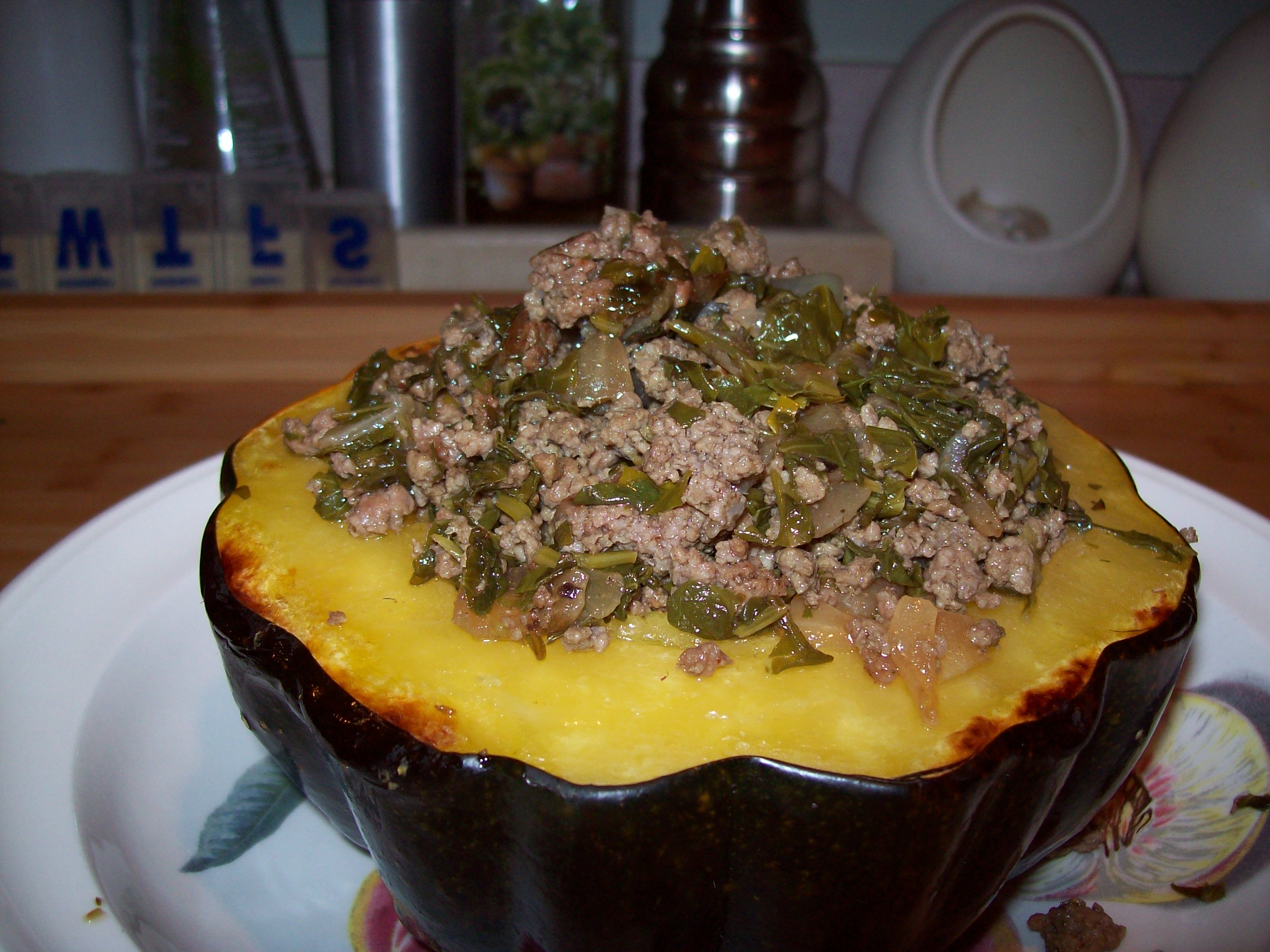
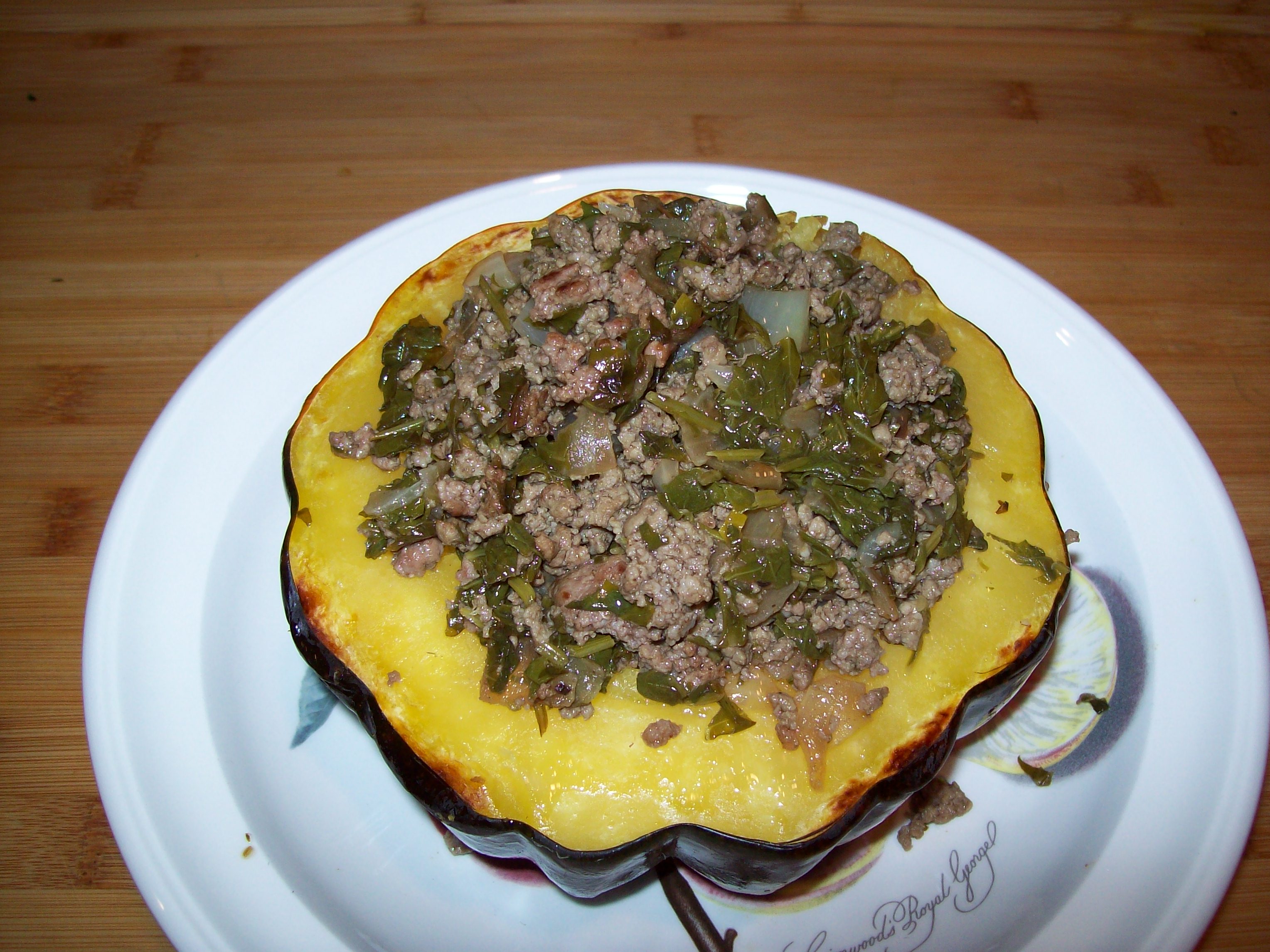
Acorn Squash with Ground Lamb and Kale

Acorn Squash with Ground Lamb and Kale

My brother in-law Mike (seems to be about 12 Mike’s in our families) usually has good taste in most things including food he posted this to his Facebook, I in turn pinned as it is called to my Pinterest and Lyn in turn batted her eyes and ask “Do you think you could…” So yesterday as we were drying some more Kiwi (metzah metz attempt) we went to Wholefoods to picked up so ground lamb and kale and as Lyn put it on the way home “ I am going to go home have a glass of wine while my husband cooks me dinner” Spoiled maybe but deservedly so, beside I love her ever so much.

From The Paleo Secret

Ingredients

  • 2 acorn squash halved and seeds removed (cut ends off both sides so they sit on a flat surface)
  • 1 to 1 ½ lbs of ground lamb
  • 2 bunches of kale (washed, de-stemmed and chopped)
  • 2 large onions (chopped)
  • salt and pepper
  • cumin
  • coriander
  • 4 Tbsp coconut or palm oil for cooking

Steve note: they do not give measurements I suggest from 2 Tsp to 1 Tbsp. or cumin and coriander. Also next time I am adding some cinnamon.

How

Preheat oven to 400 deg. Place acorn squash halves upside down in a baking dish and fill dish with a little bit of filtered water. Bake for 40 minutes or until soft and fork goes through easily.

While squash is baking, heat oil in a large skillet and sauté onions. Add kale and cover until it cooks down. Stir frequently. Heat oil in a second skillet and brown the ground lamb. Add salt, pepper, cumin and coriander to lamb while cooking. When kale is cooked down, add ground lamb to mixture with a slotted spoon. Stir and spoon into acorn squash bowls (once the squash halves are cooked). Drizzle with olive oil and serve. If you want extra meat, add a helping of meat mixture to the side of the bowl. Enjoy!

Other lamb recipes from stevesacooking.com

BBQ Masala Yogurt Marinated Butterflied Leg of Lamb

Leftover Lamb Flatbread Pizza drizzled with Pomegranate Molasses

Roast Leg of Lamb with Lemon, Garlic, and Rosemary

Lamb Stew with Spring Veggies

Gyros Sandwich “Lambie Pie”


Kale

What's New and Beneficial About Kale from Wholefoods
  • Kale can provide you with some special cholesterol-lowering benefits if you will cook it by steaming. The fiber-related components in kale do a better job of binding together with bile acids in your digestive tract when they’ve been steamed. When this binding process takes place, it’s easier for bile acids to be excreted, and the result is a lowering of your cholesterol levels. Raw kale still has cholesterol-lowering ability–just not as much.
  • Kale’s risk-lowering benefits for cancer have recently been extended to at least five different types of cancer. These types include cancer of the bladder, breast, colon, ovary, and prostate. Isothiocyanates (ITCs) made from glucosinolates in kale play a primary role in achieving these risk-lowering benefits.
  • Kale is now recognized as providing comprehensive support for the body’s detoxification system. New research has shown that the ITCs made from kale’s glucosinolates can help regulate detox at a genetic level.
  • Researchers can now identify over 45 different flavonoids in kale. With kaempferol and quercetin heading the list, kale’s flavonoids combine both antioxidant and anti-inflammatory benefits in way that gives kale a leading dietary role with respect to avoidance of chronic inflammation and oxidative stress.
Local Corn

Local Corn

Ok like the saying if you don’t like the weather wait a minute applies to anywhere you live the same with the best corn is from wherever you happen to be living. Everyone brags about how great their corn is in their part of the country. The real answer is try to get corn that is grown and picked no more than a few miles from where you live and picked with in the last few hours. At least that is my general rule.

Sweet corn is a warm-season crop and one of the major vegetables grown in New England.

  • It is an extremely popular crop for roadside stand and farmers market sales.
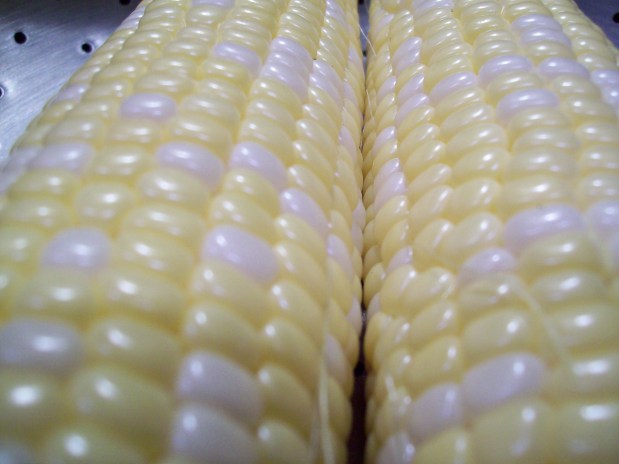
  • The average ear of corn has 800 kernels, arranged in 16 rows.
  • There is one piece of silk for each kernel.
  • A bushel of corn contains about 27,000 kernels.
  • Each tassel on a corn plant releases as many as 5 million grains of pollen.
  • Corn is an ingredient in more than 3,000 grocery products.
  • One bushel of corn can make 33 pounds of sweetener, 32 pounds of starch, or 2 1/2 gallons of ethanol fuel.

Selecting Corn on the Cob

Fully ripe sweet corn has bright green, moist husks. The silk should be stiff, dark and moist. You should be able to feel individual kernels by pressing gently against the husk. As soon as corn is picked, its sugar begins its gradual conversion to starch, which reduces the corn’s sweetness. Corn will lose 25% or more of its sugar within 25 hours after harvesting it. Fresh corn, if possible, should be cooked and served the day it is picked or purchased.

Between the time of purchase and cooking, keep the corn moist and cool. Refreigerate it immediately to help the corn stay sweet. You can add a teaspoon of sugar for each quart of water used to cook corn that has not been used immediately. Be sure to use corn within 2-3 days.

In the Husk – Grilled or Baked:

In American regional cooking, corn is important in many recipes, such as corn chowder, creamed corn, succotash, and cornbread. But no preparation can come close to the timeless appeal of simple buttered corn on the cob. All over New England, small towns celebrate the harvest with sweet corn festivals. Settlers adapted the Indian style of roasting corn with the husks removed, and to this day, street vendors around the world sell husked corn.

To prepare, pull husk back off each ear of corn, but leave attached at base of cob. Pull off and discard silk; trim off any insect damage, and rinse ears. If you want to butter them pat ears dry and rub with soft butter. Pull husks back up around corn.

If you want the husk to stay snugly against the ear, pull off one or two of the outer husk layers, tear length wide into thin strips, and tie them around ear in several places. Just before cooking, immerse the ears in cool water (this prevents burning). Just as soon as the husk picks up the dark silhouette of the corn kernels underneath and begins to pull away at the tip of the ear, the corn is ready to remove off the grill.

To Grill: Husk corn and discard silk; wrap each ear loosely with aluminum foil. Over gas or hot coals, place corn onto a hot grill over medium heat. Cover barbecue with lid, open any vents, and cook fifteen to 20 twenty minutes; turn occasionally.

To Bake: Preheat oven to 375 degrees. Prepare corn as directed for grilling, but put ears in a single layer, separating them slightly, directly onto the oven rack or onto a baking pan. Bake twenty to twenty-five minutes or until corn is tender when pierced and very hot.

To: Steam: Husk corn and discard silk. Place some water on bottom of pan and place corn in steamer tray or in water Corn is not covered but my Mom used to. Cover pot bring water to boil and steam about 1-3 minutes turn off heat and let sit covered until ready to eat about 10-15 minutes.

To Microwave: Perfect for cooking just one ear of corn. Husk corn and discard silk. Rinse and wrap each ear loosely in a paper towel. Cook on full power one to two minutes or until ears are very hot to touch.

From my days at Paul’s Market I still prefer raw corn, which is how Paul and I would determine which row of corn we would be buying that day for the store.

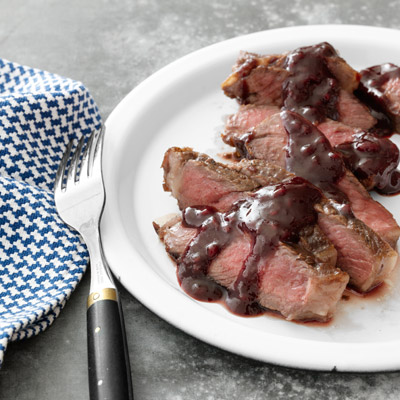
Rib eye Steaks with Rasberry Sauce

Rib eye Steaks with Rasberry Sauce

Arbie turned me on to Rib Eye steaks way back when, not sure if he even remembers. A few of us got together at the Silver Lounge

and he ordered a Rib Eye, I never had so tired I could not believe the flavor and it has been one of my “eat out” favorites for many years. A few weeks ago Whole Foods had Rib Eye on sale so we bought a bunch and froze. So we have been trying different things with them and try use things in season.

Lyn, once dub the catalog queen of Milford by the postman, found this in Country living. She now subscribes to all her catalogs and magazine online saving trees whenever she can.

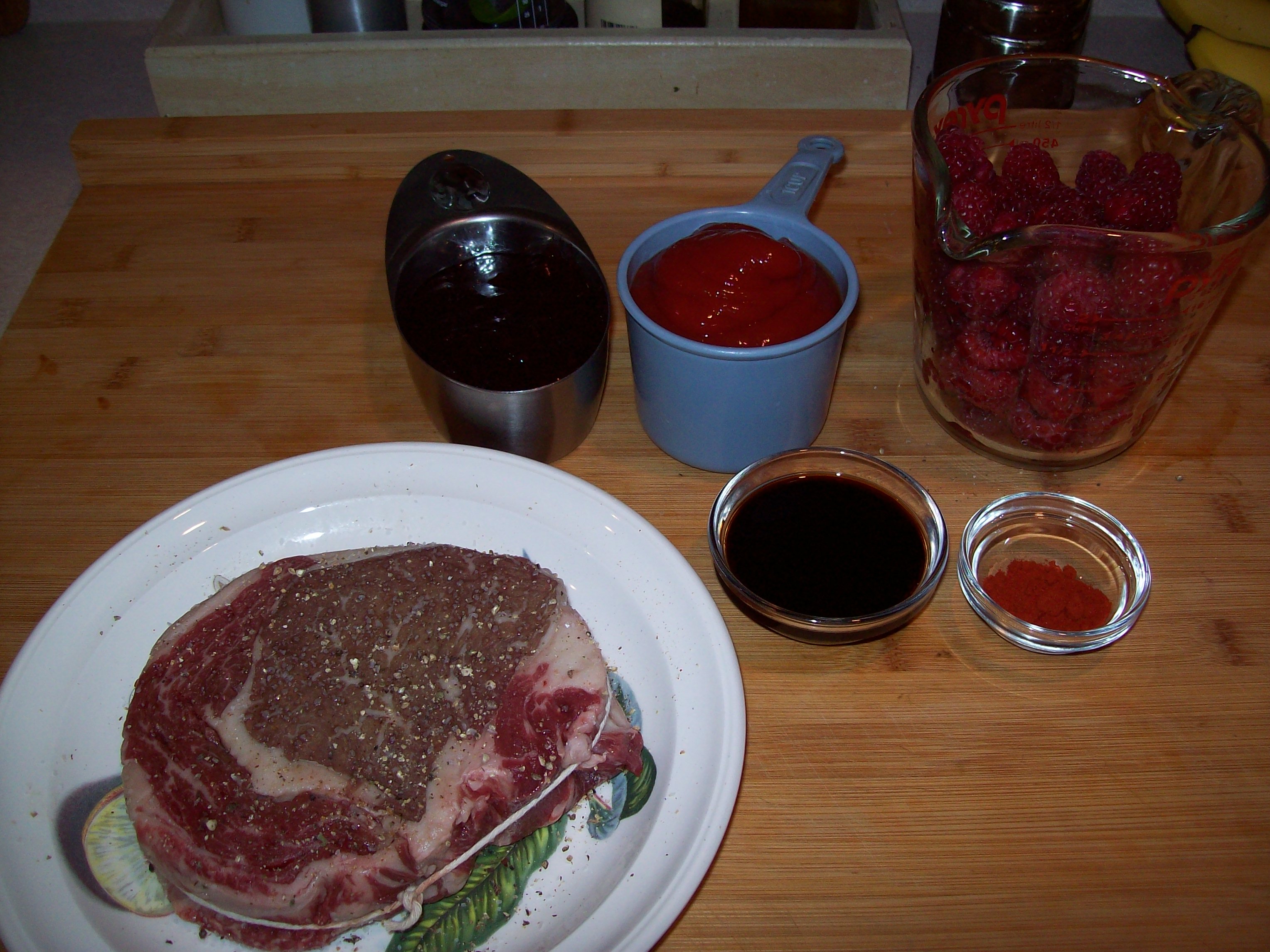
Ingredients

  •  1 bottle(s) red Zinfandel
  • 2 cups raspberries
  • 1 cups ketchup
  • 3/4 cups seedless raspberry jam
  • 3 Tbs. balsamic vinegar
  • 1 tsps. sweet paprika
  • 1/2 tsps. ground cinnamon
  • Salt
  • Freshly ground pepper
  • 4 (1 pound each) bone-in rib-eye steaks

How

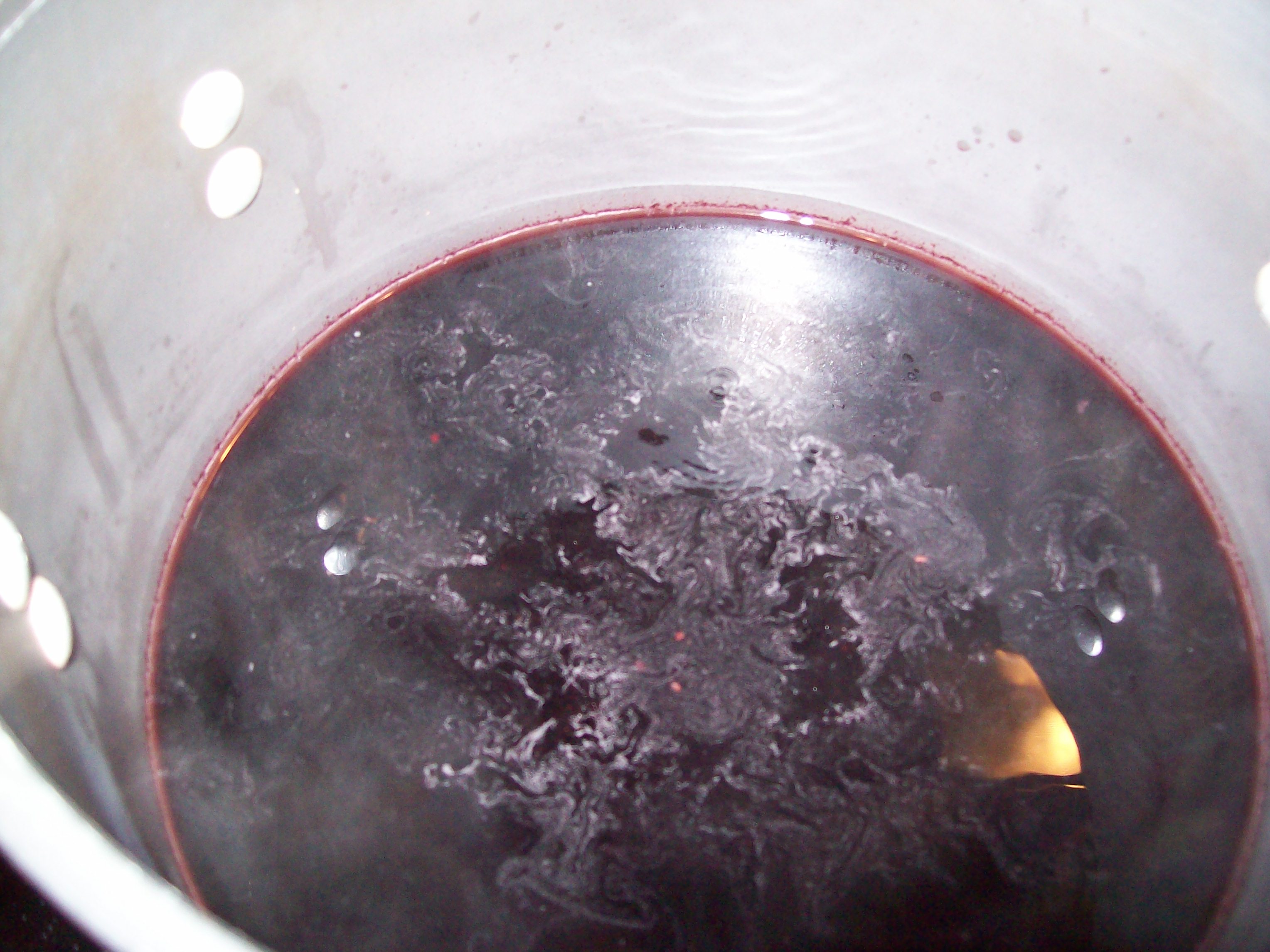
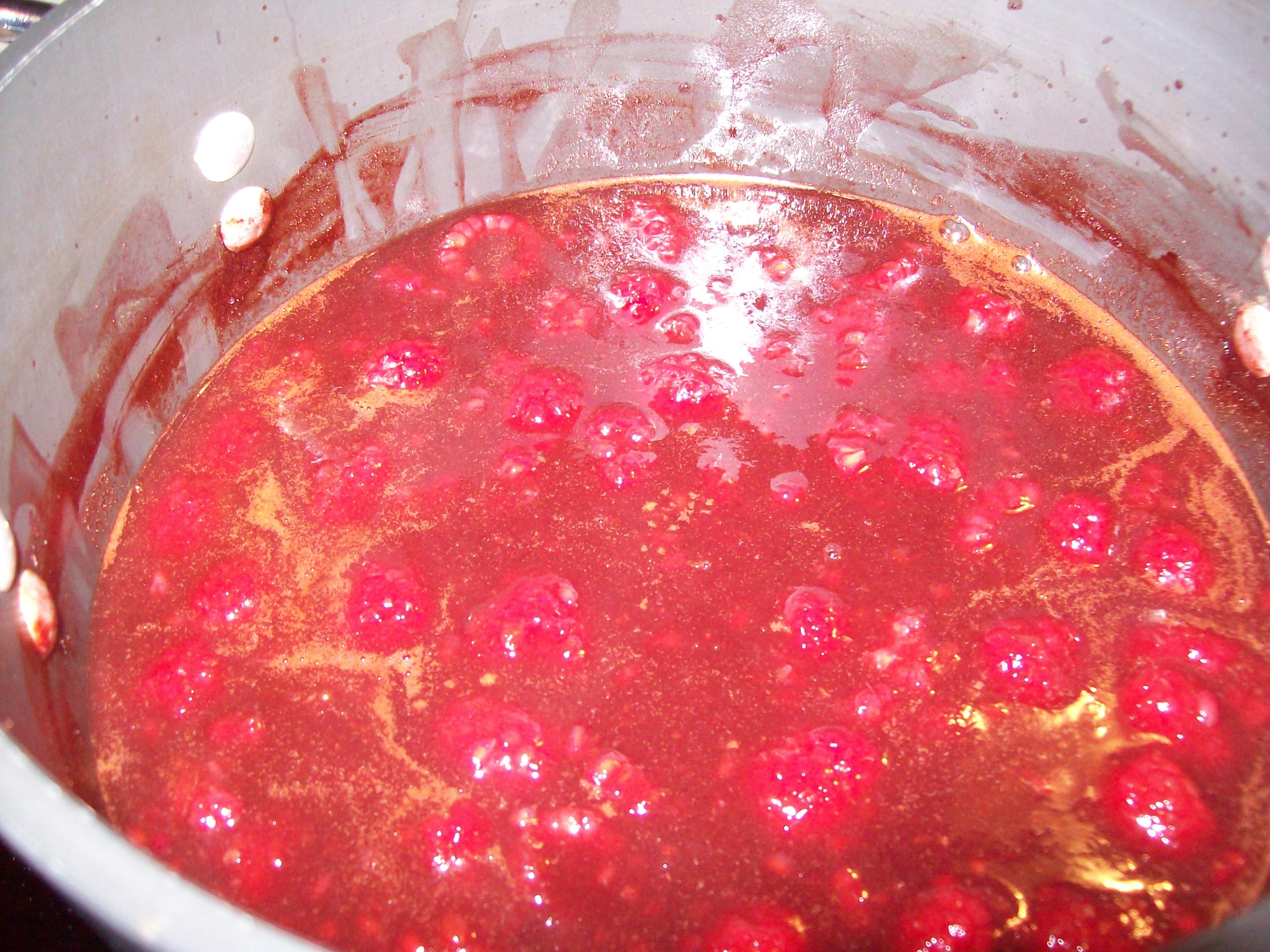
In a medium pot over medium-high heat, bring wine to a boil. Lower heat and simmer until reduced by half, about 25 minutes. Add raspberries, ketchup, jam, vinegar, paprika, and cinnamon; simmer, stirring, for 20 minutes. Season with salt and pepper; set aside.

Heat grill to medium-high.

Something that I read and have been doing when grilling steaks is to place the meat in freezer for about 20 minutes before grilling. This has been giving me great steaks grilled on outside yet juicy and cooked just right on the inside with really good flavor. I know I was brought up never cook meat right out of the frig let alone partially frozen but I tried and it is now my way.

Pat steaks dry, Season steaks with salt and pepper place in freezer for about 20 minutes.

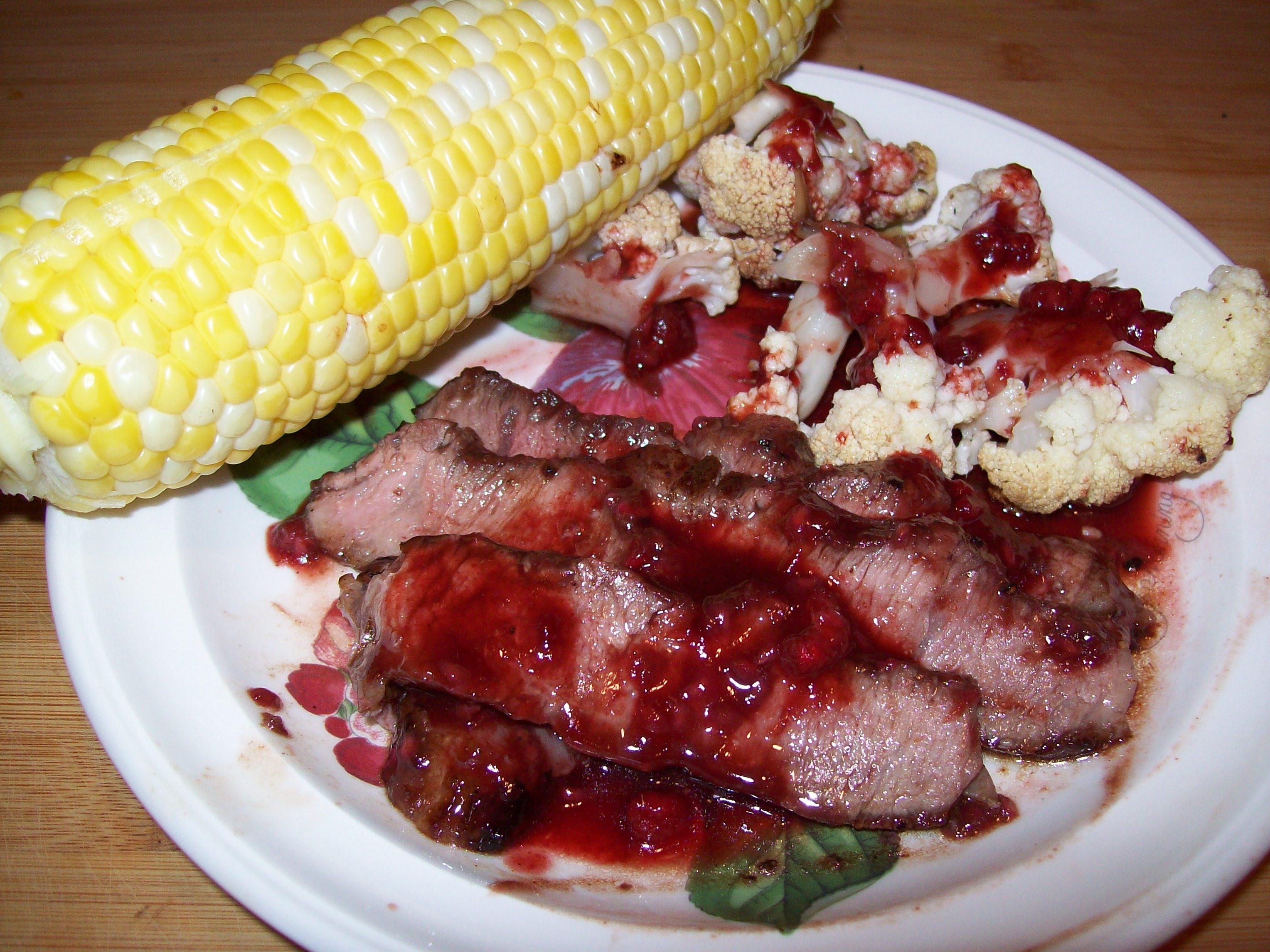
Grill for medium-rare, grill for 6 minutes per side. Brush steaks with sauce, flip, and grill for 2 minutes. Repeat on other side. Serve sliced, drizzled with sauce.

Thiers had bone in I cut my grilling time to about 4 minutes instead of 6 per side since mine did not have the bone in.

You can use the ball of thumb method I posted or a meat thermometer to test for doneness.

Raspberries

What’s New and Beneficial About Raspberries

  • One of the most fascinating new areas of raspberry research involves the potential for raspberries to improve management of obesity. Although this research is in its early stages, scientists now know that metabolism in our fat cells can be increased by phytonutrients found in raspberries, especially rheosmin (also called raspberry ketone). By increasing enzyme activity, oxygen consumption, and heat production in certain types of fat cells, raspberry phytonutrients like rheosmin may be able to decrease risk of obesity as well as risk of fatty liver. In addition to these benefits, rheosmin can decrease activity of a fat-digesting enzyme released by our pancreas called pancreatic lipase. This decrease in enzyme activity may result in less digestion and absorption of fat.
Dried Kiwis like really good gummy bears

Dried Kiwis like really good gummy bears

Nicole at work pointed me to a Groupon for Water Fresh Farm in Hopkinton, MA. (BTW Hopkinton hosts the starting line for the Boston Marathon) that had fresh hydroponically grown vegetables.  Lyn and I are always looking for new shopping experience and in my younger years while living in the mud flat desert in Temecula CA. I worked on a construction site that was building hydroponic greenhouses and then moved right into the growing end after they were completed. Back then Temecula boasted 101 residents, a one salon, one gas station town.  I hear it has grown quite a bit since my days there a Willy jeep, two horses and miles and miles of open land. We were there during the big gas shortage but never realized because our gas station was only open 2 days a week. Anyway that is a story for another day, but I should tell you this one story which probably dates me but do you remember the commercials we took the Clorox away from XYZ town? Well Temecula was one of those towns and from what I understand only about 20 people used it so it was not such a hard task.

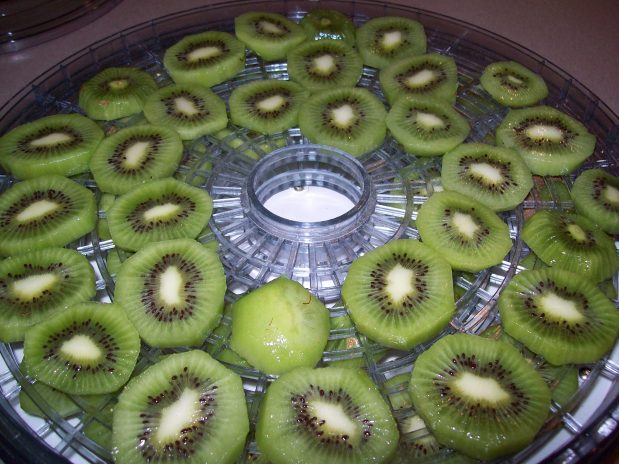
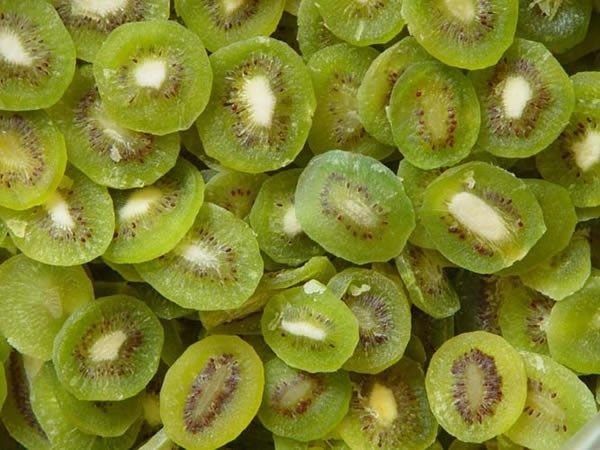
Back to Water Fresh Farms, a nice little grocery store hidden away on route 85 is actually a small group of vendors nestle together in a little cul-de-sac anything from ice cream, gift , crafts  to  gifts. One of the many items we picked up on our first visit was dried kiwi. The only way I can describe them is like a really good gummy bear. So we decided to give it a shot.

Ingredients

  • 9-10 Kiwis

How

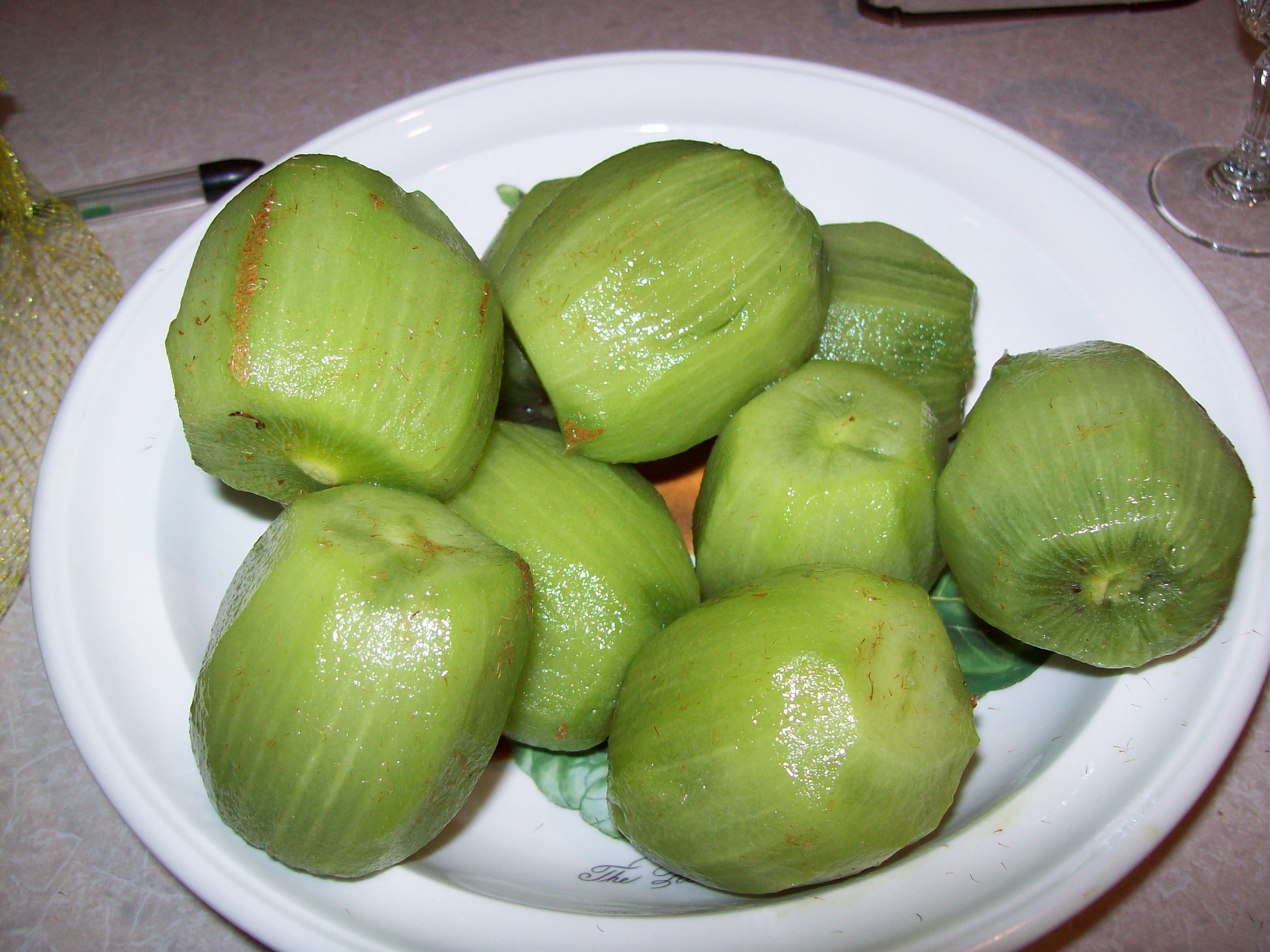
Peel Kiwis
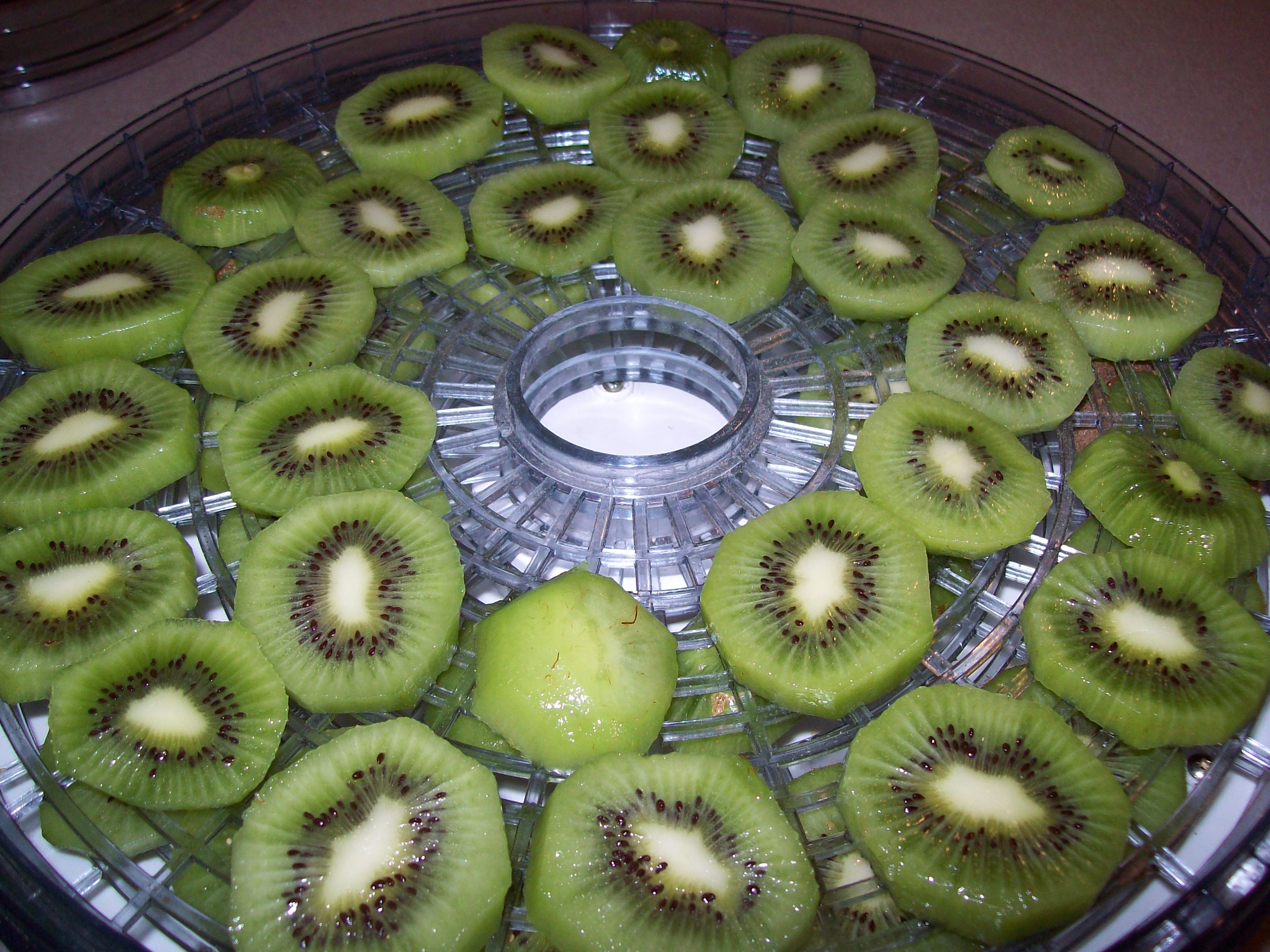
Slice in ¼” slices – don’t go thinner gets to dry. Lay them out on dehydrator trays. Turn on and wait. The length is tricky it depends on the dehydrator and the Kiwis but maybe around 3 hours Doneness is up to you. Let cool and store in airtight container or bag.

The picture of finished product is not ours, do not do what we did, we forgot and went to see Batman and some food shopping at Whole Food, they are very good but were dried a little too long. Next time we stay around and I will post the pictures and time.

 1/4" thick


Kiwi and its Many Health Benefits

By: Alexandria Hardy, RD

What’s in a Name?

For this fruit, quite a lot! The kiwi, originally called the Chinese gooseberry and later the “sunny peach”, was renamed the kiwi by New Zealand natives after their national bird. There are over 400 varieties of this fuzzy fruit, which grows off of vines on a trellis, much like grapes are cultivated.

Quintessential Kiwi Research

Researchers exploring the potential positive features of the kiwi fruit have conducted several studies involving children and adults. A study in Italy indicated that children had less trouble with wheezing, shortness of breath, and coughing in the night when they consumed 5-7 servings of kiwi or citrus fruit a week. Asthma sufferers were found to derive the most benefit from the kiwi, even when eaten as few as 1-2 times a week. Adults can also benefit from eating the jewel-toned fruit! Another study demonstrated that eating 2-3 kiwi fruits a day can reduce the potential for blood clots and decrease triglycerides. Yet another study cited the kiwi’s ability to protect and repair the body from DNA damage, which could protect against cancer.

Nutritional Nods

From disease prevention to an abundance of vitamins and minerals, the kiwi provides a wide array of nutrition benefits. According to a study at Rutgers University, the kiwi is the most nutrient dense fruit, ounce for ounce. Below is a list of the different ways that the naturally fat-free kiwi can help our health:

•Disease Prevention

Fiber: Kiwi provides 16% of the RDA for fiber and has a role in the prevention of constipation and some cancers.

Phytonutrients: Kiwis have phytonutrients, which repair DNA, act as the body’s protection against some cancers, and function as antioxidants. Learn more about phytonutrients plant powers.

•Vitamins

Folic Acid: Kiwi provides 10% of the RDA for folic acid, which is important for expectant mothers and works to produce red blood cells.

Vitamin C: One serving of kiwi gives the body 230% of the RDA for Vitamin C, which helps heal wounds, increase iron absorption, and boost the immune system.

Vitamin E: Kiwi provides 10% RDA for Vitamin E and decreases the risk of heart disease.

•Minerals

Calcium: Kiwi provides 5.5% of the RDA for Calcium.

Chromium: Kiwi aids in regulating heartbeats.

Copper: Kiwi provides 8% of the RDA for Copper.

Iron: Kiwi provides 4% of the RDA for Iron.

Magnesium: Kiwi provides 6% of the RDA for Magnesium, which  can enhance your energy level.

Potassium: Kiwi aids in fluid maintenance.

Zinc: Kiwi helps keep hair, skin, teeth, and nails healthy.

Selecting, Storing, and Eating a Kiwi

How do I choose a kiwi?

•Look for a fruit that is plump and fragrant with no visible bruising or wrinkles and a slightly firm feel

What if I chose a fruit that isn’t yet ripe?

•Kiwis ripen quickly when placed in either a paper or plastic bag with a banana. However, once they are ripened, store them away from other fruit or they will decompose more quickly!

How long are kiwis good for once I buy them?

•Ripe kiwi fruit can last in the refrigerator for 1-2 weeks.

Can I eat the skin?

•You can, but wash carefully to remove unwanted pesticides! Rub it a bit to minimize the fuzz. The skin actually provides more fiber to your sweet snack. If you’re not fond of the fuzzy exterior, simply “sloop” it out by slicing the kiwi in half horizontally and spooning out each end to enjoy.

What is a serving size?

•A serving of kiwi fruit is ½ cup, or 1 medium-sized kiwi.


Pan Seared Oven Roasted Tenderloin

Pan Seared Oven Roasted Tenderloin

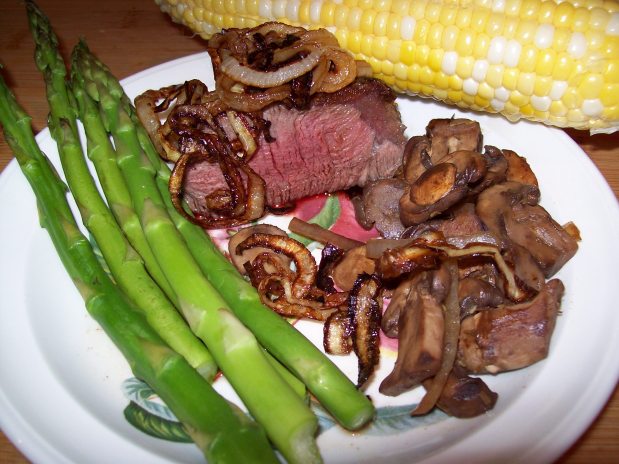
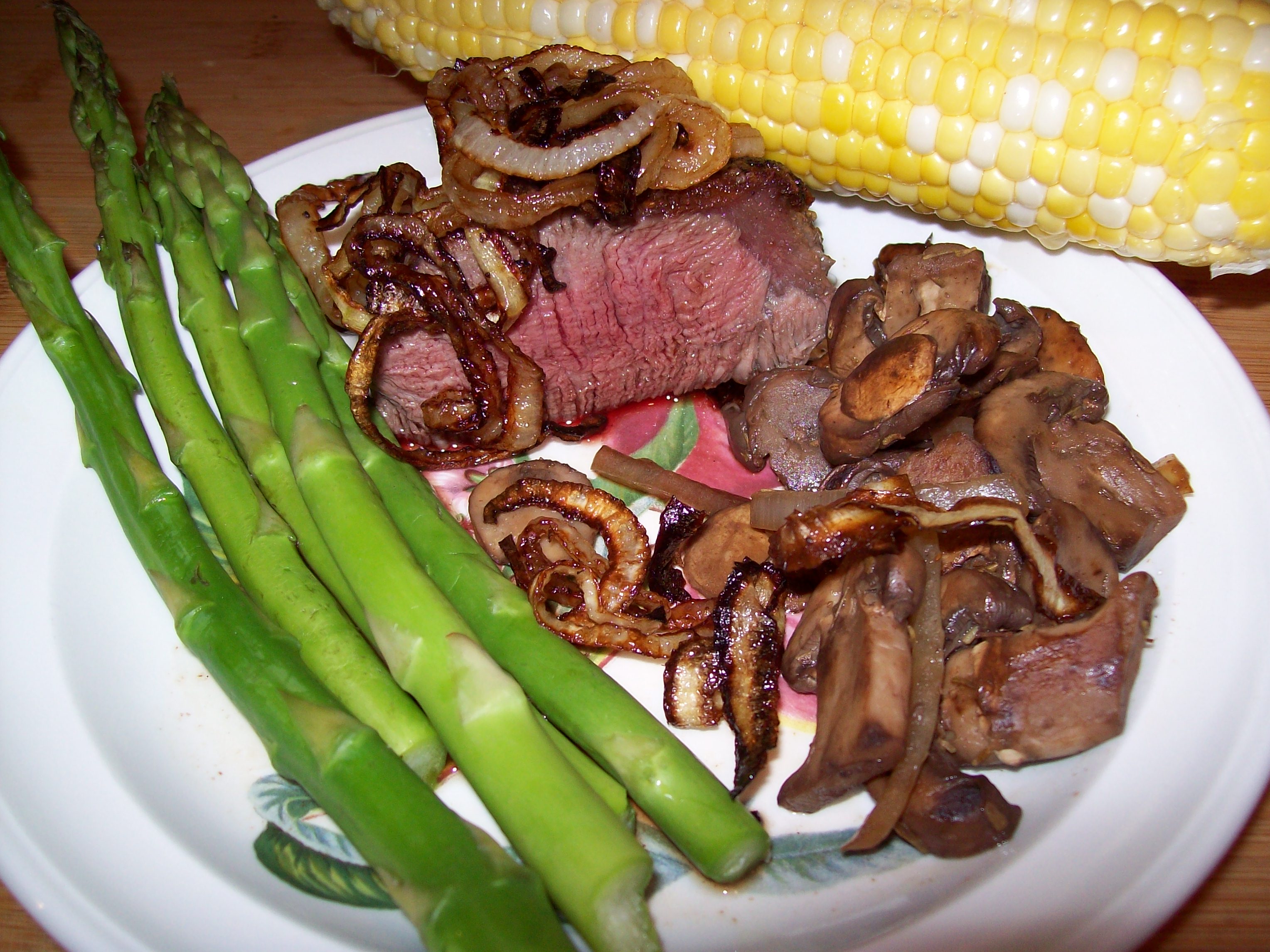
I know you have gone out to dinner and had that wonderful melt in your mouth steak Filet Mignon. Being that it is an expensive cut of meat at the restaurant it is much more economical to cook at home especially when you do not eat as much, heck Lyn and I can share one and are completely satisfied. I used to laugh to myself watching my parent split such a small piece of meat. At home some like to broil or grill but I prefer to pan sear and finish off roasting it in the oven. Do yourself a favor don’t buy grocery store cuts unless it is something that equals the quality of Wholefoods or a local butcher the $4 to $6 a pound you save is not worth it

FYI from about.com

Question: What is filet mignon?

Filet mignon is an expensive tender cut of beef

Answer: Filet mignon is considered the king of steaks because of its tender, melt in the mouth texture. A prime filet mignon can literally be cut with a fork. This beef cut can be quite expensive when dining out, but much more reasonable to make at home, especially if you purchase a whole tenderloin.

Filet mignon is French, of course, with filet meaning “thick slice” and mignon meaning “dainty.” It first appears in American print in 1899. Filet mignon comes from the small end of the tenderloin (called the short loin) which is found on the back rib cage of the animal. This area of the animal is not weight-bearing, thus the connective tissue is not toughened by exercise resulting in extremely tender meat.

The tenderloin term (also erroneously called chateaubriand) applies to the entire strip of tenderloin meat, whereas slices of the tenderloin are termed filet mignon. Filet mignon slices found in the market are generally 1 to 2 inches thick and 2 to 3 inches in diameter, but true mignons are no more than 1 inch in diameter and are taken from the tail end. Although this cut is very tender, the beef flavor is proportionately lessened. As such, it is often served with an accompanying sauce incorporating the pan juices.

Ingredients

  • 1 or 4 Filets depending on how many you are serving about 1 ½ to 2” thick
  • 1 small or medium sweet onion sliced very thin
  • Button mushrooms
  • 1 small clove garlic
  • Butter
  • Vegetable oil

How

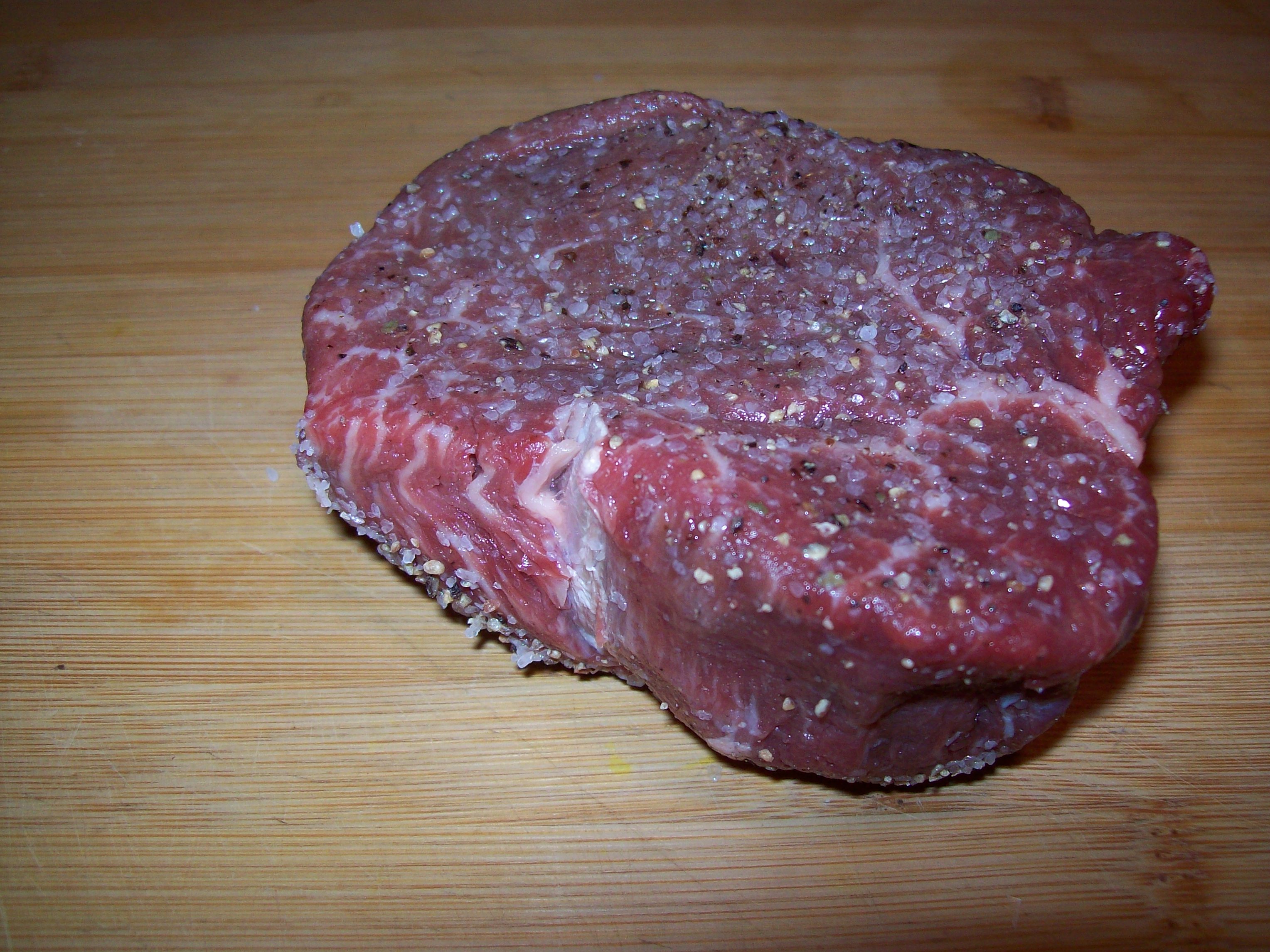
Season the steaks with salt and pepper and bring to room temperature.

Slice the onion very thin.

Preheat oven to 4250 rack in center.

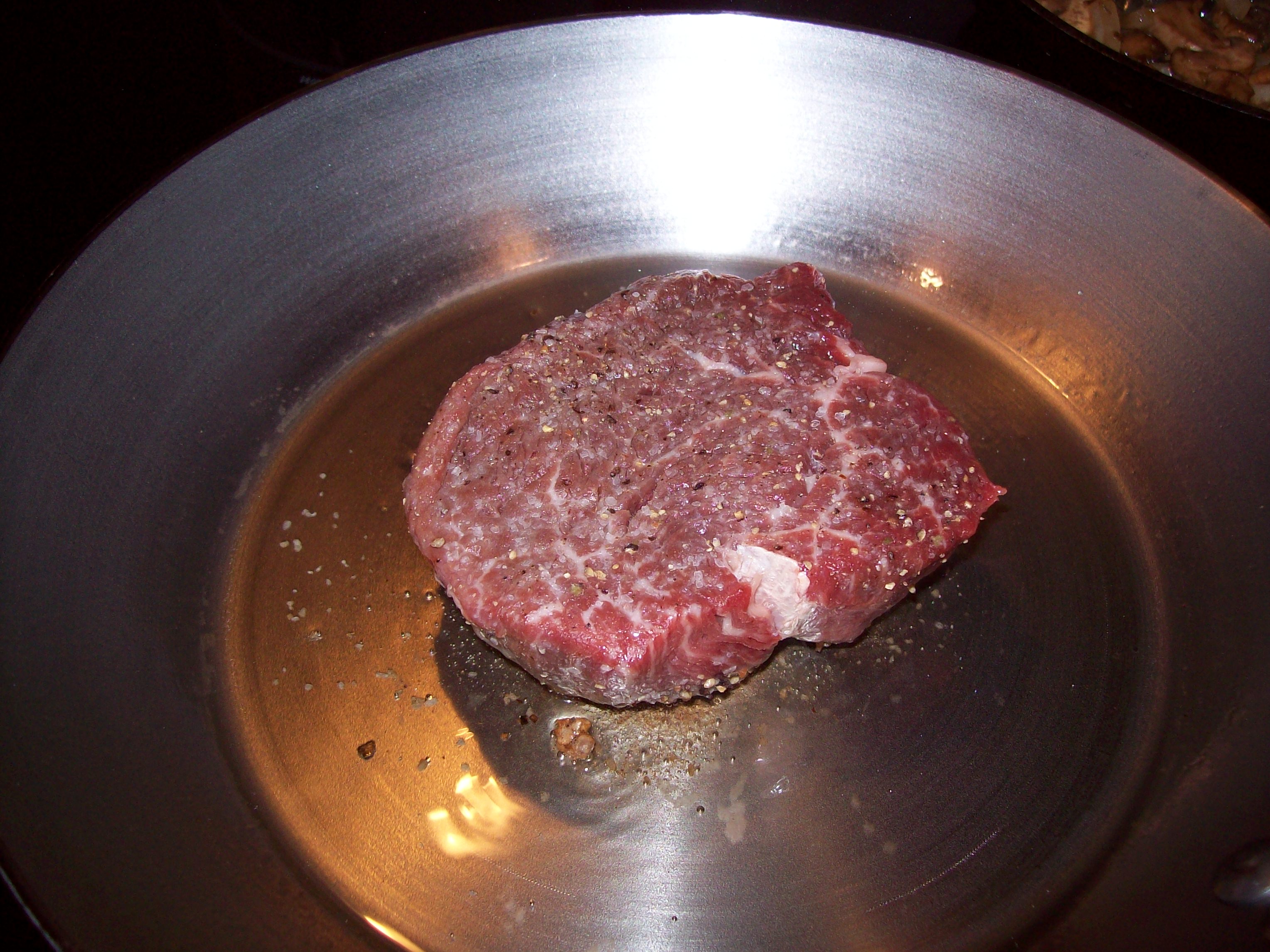
Heat the oil over medium heat in an oven proof pan.

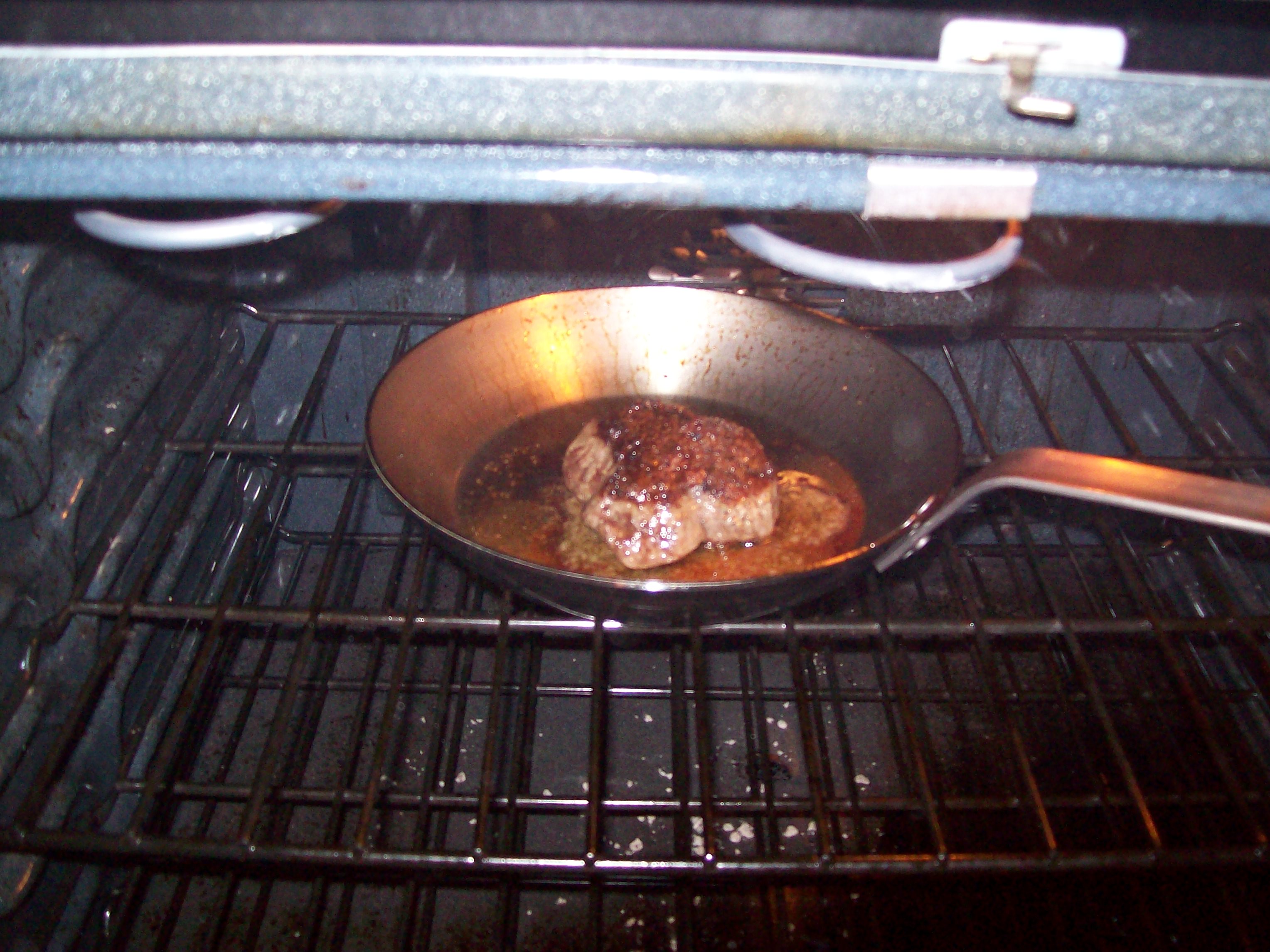
Sear the steaks for about 5 minutes.

Turn and place the pan in oven for about 7 minutes.

Remove cover very loosely with tin foil and let set for 5 minutes before serving.

Either the mushrooms or onions are optional but we like them.

Meanwhile sauté in butter, half the onion, garlic and mushrooms to be used as side.

In another pan heat the vegetable oil until simmering and add a little at a time some of the remaining onions, the goal is to crisp. I will be honest here I have only been successful in crisping the onions to my liking once or twice but they always are a good topper for the steak. If anyone can share how to do it let me know. Thanks


This is always a 2 head bobbing up and down from Lyn and Steve.


Some other recipes from Stevesacooking.com

Flank Steak Stir-Fry with Asparagus, Red Bell Peppers and Caramelized Onions

Herb Rubbed Flank Steak